Thursday, June 14, 2007

Rain at last

I'm really liking these overcast days with cool mornings and some rain. There was a real down pour on Wadmalaw today and it was so nice. The dogs sleep and are quiet when there is rain. It's as if they are enjoying the soothing sound of the rain as much as I do. We have been in such a drought that having a couple of days of rain will green up the yard in a hurry.

If you notice brown spots in your yard, they may not be due to any die off of the grass due to drought but to dog urine. The girls love to pee in the front yard and wherever that occurs there will be brown patches that develop.

Here is some technical information from Penn State that may help:

Dog urine and feces can often be a frustrating problem related to lawn care. Small amounts may produce a green up or fertilizer effect while larger amounts often result in lawn burn or dead patches. While most burn spots will recover with time and regrowth, dead areas can be large enough in some cases to require reseeding or sodding. For homeowners who are also dog lovers, this can present a dilemma, particularly when one family member prefers the dog and another prefers a well-manicured lawn. An understanding of the interaction between dogs and the lawn can keep the yard (and family) at peace, not in pieces.

Understanding the Causes: The fundamental problem with the presence of urine or feces on the lawn is related to the nitrogen content and concentration of these waste products. Urine, when produced as a waste product in animals, primarily removes excess nitrogen from the body via the kidneys. Nitrogen waste products are the result of protein breakdown through normal bodily processes. Carnivores, including cats and dogs, have a significant protein requirement and urine volume/production varies due to size and metabolism. Urine is a more serious problem for lawns because it is applied all at once as a liquid fertilizer, whereas feces slowly releases the waste products over time. since stools are usually solid, owners have the option of frequent manual removal. With more time for the nitrogen waste to dissolve into the lawn, stools that are frequently removed damage lawns less than urine.

Young dogs of both sexes frequently squat to urinate. Leg lifting is often learned by male dogs around a year of age; castration or neutering does not seem to affect nature's timetable related to this behavior development. While most male dogs will hike their leg and mark once they are over a year of age, a few will continue to squat which is more common in female dogs. Female dogs may also mark although less commonly than male dogs. Once dogs begin urine marking, they often utilize many and numerous scent posts resulting in numerous, small volume urinations rather than large volume puddles. Grass can handle small volume nitrogen bursts easier than fertilizer overload. Unfortunately, the young bush, shrub, vine or tree sprout that becomes a marking post may have nitrogen (fertilizer) overload with repeated marking and may die if continually "marked."

The primary concern in addressing urine damage to lawns is minimizing the nitrogen concentration added to the lawn at any single time. Female dogs, being less likely to urine mark and more likely to squat, are the primary culprits of lawn damage since they will go anywhere on a lawn and usually all at once. This results in a single nitrogen dump confined to a small patch of grass. The brown spot that results will often have a green ring around the outside. The nitrogen overload at the center causes the burn, but as the urine is diluted toward to periphery, it has a fertilizer effect. This characteristic brown spot, green ring pattern has been called "female dog spot disease" by some horticulturists. As might be expected, lawns are most susceptible to nitrogen burns when standard fertilizers are maximized in the lawn. Homeowners making the extra effort to have a green lawn may be quite discouraged by their neighbor's dog damage or their own housepet's potty residue.

Speculations on the actual cause of the lawn burn has resulted in numerous theories on what else in the urine may be contributing to the damage. Dr. A. W. Allard, a Colorado veterinarian, examined numerous variations in dog urine and the effects on several common lawn grasses. His results support the fact that volume of urine (nitrogen content) and urine concentration had the most deleterious effects on lawns. The pH of the urine did not have any variable effect nor did common additives designed to alter the urine pH. Of the four grasses tested, Festuca sp. var. Kentucky 31 (fescue) and Lolium perrene (perennial ryegrass) were the most resistant to urine effects. In fact, the urine routinely produced a fertilizer effect on these grasses at diluted concentrations. Poa pratensis (Kentucky bluegrass) and Cynodon sp. var. Fairway (bermundagrass) were very sensitive to any urine concentration and severe burns resulted, persisting greater than 30 days after initial exposure to even four ounces of diluted urine. Even on the most urine resistant grass tested (fescue), urine concentration was a bigger problem than urine volume. Concentrated urine with volumes as little as 30cc (one ounce) caused lawn burn even on fescue grasses.

Problem Area Avoidance Technique: Where applicable, fences can be used to keep neighboring dogs from eliminating on the lawn. Advising neighbors of the legality of leash laws, where applicable, can restrict damage to areas near sidewalks and on tree lawns/median right of ways. Unfortunately, no repellents are universally effective, although a variety of home remedies have been tried. Hot and bitter products are most likely to have taste or odor aversive properties to dogs. Most repellents function better as taste repellents than to touch or odor repellents. Some odor repellents may actually encourage a dog to overmark the strange smell. Some of the better known commercial repellents have these limitations as well. A newly developed motion activated sprinkler, primarily designed to keep cats and rabbits out of gardens, may have benefits for some yards. The sprinkler may provide some benefit in small yards or at corners of front yards where damage is most likely to occur; however the presence of numerous squirrels, stray animals or children may result in over-watering and very high water bills if they continuously trigger the device.

In many cases, the problem dog is a housemate to the homeowner. While somewhat time consuming, walking the dog to a park or field away from the house is a simple remedy to this. The time can be well spent since exercise has physical and emotional benefits for both dogs and their owners. Homeowners are encouraged to choose an appropriate destination and not create problem lawns elsewhere that may affect the over-all aesthetics of the neighborhood.

A more feasible approach may be to train the pet to eliminate in a designated area of the yard. This area would be a landscaped area specifically designed for the dog. It will need a substrate like pea gravel or mulch that the dog finds acceptable and may even include a marking post like a large boulder, bird bath, lawn ornament or even faux hydrant. Collecting the dog's urine in a cup and using it in this area for several days can provide some odor attractant value to this area. Feces can also be collected and transported to the new designated area. Consistency for at least two-three weeks is important to establish this as a routine, trained behavior; several months may be necessary in some cases. Initially, training can occur with the dog on a short leash and food rewards employed to encourage use of this area. Dogs should not be unsupervised in the yard while this initial training is occurring. It is often easier to train a young puppy to a particular ground texture than an adult dog, but never impossible in any age dog. A variable reward system utilizing one standard treat if urinating anywhere outside and several treats or a special treat if in the designated area can be helpful in this process and avoid confusing the dog regarding the new housebreaking rules. Excessive food rewards in the form of meat or protein products will contribute to increased nitrogen content in the urine. Dogs that are being obedience trained should not be trained with treats on the lawn during this housebreaking or pets and reward systems can really become confused. Many dog owners will also find it helpful to train their dog to an elimination command during this time. common commands might include: potty, piddle, do your business, hurry up, etc. and take less time to accomplish the task when inclement weather is present or time schedules are busy.

Dietary Modification Techniques: A great many dietary modifications for dogs have been tried, often based on home remedies or anecdotal experience. A veterinarian should always be consulted prior to making any dietary modifications, whether they include additions or subtractions from standard nutrient guidelines. As stated earlier, the pH of the urine has little or no effect on the urine damage to the lawn. The addition of acidifying agents, including nutritional supplements like D-1, Methionine (Methioform), Ascorbic Acid (Vitamin C) or fruit juices, will have no benefit for this problem and may predispose the dog to an increased incidence of certain bladder stones. Likewise, alkalinizing agents, including baking soda and potassium citrate, can predispose to other types of bladder stones or infections. The addition of any of these supplements has enough potential to cause harm, with limited to no known benefit for the lawn and are not recommended.

When owners have reported successes, as is sometimes the case on internet forums, liquids likely improved the situation because the urine concentration after treatment was diluted. Safer ways to accomplish more dilute urine include feeding canned food, moistening dry food with water prior to feeding and adding salt or garlic salt to the regular food. One particular home remedy, tomato juice, likely has its primary benefit through both increased salt and water intake. While salt will make the dog drink more and dilute the urine, increased salt intake can cause problems for dogs with existing kidney or heart conditions. Owners should not alter their dog's diet without consulting with their veterinarian.

Dogs with more dilute urine may have to go more frequently as well and need more frequent elimination opportunities. While specific breed differences haven't been noted, smaller dogs produce less urine than larger dogs so are dumping less nitrogen waste. Dogs with bladder infections often demonstrate an urgency to urinate and typically squat several times, leaving small amounts or drops each time. These dogs may be less of a problem for lawns than normal dogs who empty their whole bladder in one sitting. Dog owners who actually note that their dog's urine is no longer causing lawn burn without having made any changes should have their dog examined by their veterinarian and a urinalysis performed to make sure there are no medical conditions causing this change.

The other option to consider besides diluting the urine is to reduce the amount of nitrogen waste being dumped in the urine. The average family dog doesn't have the activity

level that requires as high a protein level as most commercial maintenance dog foods provide. Although dog food purchasing often reflects consumer perception that high protein equals better food, in fact moderate to low protein foods are often adequate for all but the most energetic working and hunting dogs. When examining a food label, protein content must be compared on a dry matter basis and unfortunately it is not like comparing apples to apples. Dry foods vary in how much moisture they have, so the protein percent listed can't be immediately compared to all other foods. Canned foods will have a much lower protein percent listed than dry foods but also have much higher water content.

The quality of the protein also has an impact since some proteins are highly digestible, meaning less is dumped in the feces and possibly the urine than other proteins. In general, the premium and super premium pet foods, available from pet stores and veterinarians, will have higher quality protein and more digestible proteins than standard grocery store brands. The higher digestibility translates into smaller fecal size as well. It is probably best to discuss individual pet needs with a veterinarian or nutrition consultant in the practice to determine what is the best fit, based on feasibility, palatability and economics. In many cases, if a dog food is currently providing good overall nutritional support for the pet, diluting the urine by simply adding water to the food may be the easiest place to start.

Repair/Recovery of Damage Area: A leash can function to bond owners to their dogs and increase the time pets spend interacting with their owners. A leash can also be part of a responsible neighbor policy, be a great training aid, and is also one of the best ways to be at the site to intervene when urinations occur. Watering the spot after urinations will accomplish the dilution with no ill effects on the dog. Dr. Allard's study looked at watering feccue at different intervals following urination. Water volumes three times that of the urine were used to assess their dilution effects. A fertilizer effect rather than burn was noted when the site was watered at any time up to eight hours after the urination. When the delay in watering was extended to 12 or more hours, progressively worse burns were noted. It appears that routine watering of the grass in early mornings would not be sufficient to prevent all urine burns.

The use of gypsum or lime has been advocated, but it is uncertain exactly what mechanism this would have in helping prevent urine damage. Improved soil quality over time may result in better drainage and less urine concentration at the grass and root level, but additional information is needed in this area.

Lawn burn, when mild, will often repair itself over time, especially in the case of the warm-season turf grasses that spread by stolons and rhizomes. Dark green spots and taller grasses may remain for several weeks. Sodding can be a quick way to patch severely damaged individual areas that would otherwise be invaded by weeds.

While a high fence and dog-less lifestyle can ensure that "female dog spot disease" is not a problem in your clients' yards, homeowners and dog lovers have several practical solutions available to manage this problem. Coordinating these options can keep their four-legged friends on good terms and out of the dog house so they, too, can enjoy romping in your clients' well-manicured yard.

Tuesday, June 12, 2007

Lick sores

I've had a couple of Labradors over the years that have developed lick sores. The lesions that these dogs have had have been small oozing areas on the front part of the forearm or foot. The real name for this condition is a lick granuloma. Generally, dogs who develop these lick sores are bored. Some may suffer from separation anxiety. What happens is the dog will start licking the paw or foreleg over and over, gradually wearing away the hair and the skin underneath until there is a sore area. It's a similar motivation that causes horses to crib or weave in their stall. It's also possible that these are a result of an allergic reaction that results in inflammation which triggers the dog to lick at any area nearby. It has also been reported that hypothyroidism can play a role in Lick Granuloma. It would be good to test T4 levels as certain lines are prone to hypothyroidism.

Treatments for lick granulomas include laser surgery that removes the sore tissue. For the most part nothing works though because it appears to be a psychological compulsion to lick and chew the area. Some anti-anxiety drugs have been used with mixed results. Cortisone injections have also been used and may alleviate the itchiness. Cortisone cream can be especially useful. One solution that has been useful is long-term use of antibiotics. It may take from 3 to 6 months though to make a difference. If lick sores develop, consult with your vet about what kind of treatment is advised to keep the sore from getting worse.

Sunday, June 10, 2007

Submitting preliminary radiographs

I generally get preliminary radiographs done of hips and elbows when the dogs are around 18 months of age. It's important to wait until the growth plates have closed. Taking x-rays too early can indicate subluxation on young Labradors.

Dr. Shong at Bohicket Veterinary Clinic does a wonderful job. He gets positioning perfect and also takes multiple shots. He is conservative in his assessment as well. I've always felt confident in his abilities and assessment for OFA submission. He always uses sedation for the positioning because he wants to be able to manipulate the legs into the correct position.

Once the x-rays are processed, we review them and he will point out what he likes and doesn't like. We don't submit them at this point. If the joint structure looks great, we keep our fingers crossed until the finals are submitted at 2 years of age.

Getting OFA hips and elbows done is a major milestone with breeders. It is imperative to have good positioning and a good x-ray machine when getting radiographs done.

Friday, June 08, 2007

Elbow calluses

Labradors are heavy dogs. They also tend to be laid back and most love to get their snooze time. Over time, you might begin to see red rough areas on the elbows. It's not at all uncommon for Labradors to get elbow calluses. It's nothing to be concerned about. I recommend getting Bag Balm and putting that on the elbows to keep the area soft. Most of the time though, the calluses will turn grey and will thicken no matter what you do.

If you are showing your dog, you can use cosmetic methods such as chalk to cover up the callus. However, I do think that Labradors should be shown naturally and without a bunch of froo-froo stuff done to them. Handlers will inevitably chalk, blow dry, clip, trim and generally do all kinds of things to these sporting dogs. I don't like to see Labradors all clipped with whiskers trimmed. It's just my preference since I think that they should be just given a brief brushing to knock the dust off and then presented in the ring. I don't like smelly dogs though so a bit of Listerine mixed with water will do the trick to freshen them up and cut the odor. Labradors don't need to be bathed often but regular brushing will keep their dander down and help get rid of old hair that can start to smell.

Wednesday, June 06, 2007

The Pinkster

Once upon a time, there was a litter being birthed at Surry. The humans stayed up for many hours assisting Annabelle deliver her babies. There were lots of babies and one of the little ones birthed was very small. She weighed so much less than the others. She was kept snuggled in a heating pad next to her mom.

The humans worked hard on the little one. Elizabeth stayed up most of the night and was beginning to think that the little one wasn't going to make it. She kept getting pushed off the teats by the bigger pups. So, something had to be done to save this wee baby. Elizabeth opened a can of formula, mixed in some water, and gradually got the baby to latch on to the nipple. The baby didn't want to eat at first but after giving a dose of dextrose, the baby became ravenous. She latched on and nursed! After that she had supplemental feedings every couple of hours. It was a tiring process but Elizabeth didn't give up. Between supplemental feedings, the Pinkster, as she was now known, began to feed from her mother's teats.

Gradually, as the days passed, the Pinkster gained weight and began to be a strong baby. She still enjoyed being nursed with the bottle and would work her little paws when she nursed from it.

At several weeks of age, some nice people came to visit and they fell in love with this tiny puppy who had quite the heart. Pinkster was chosen to be their companion for her life. She grew to be a fat healthy baby who could run and jump with all the other babies.

Her new parents, Ann and Paul Key, dote on this girl who is now called Neilley. Neilley goes with them everywhere and is the model for their great line of Scottish doggy clothes and accessories. Neilley still sends cards and emails to us. She will always be the wee one in our eyes.

Monday, June 04, 2007

A story about Jack


I want to share an email that I received from Mavis who owns Jack, an Anna son:


Dear Elizabeth,

I wanted to let you know how sorry I was to hear of Anna’s passing. She will always be in your heart, and I am sure you must have had wonderful times with her when she was alive. I have always loved your web site and your blog, and all those stories about your labs. I didn’t realize at first that Anna was Surry’s High Hopes, until you mentioned her full name and her daughter’s. Then I suddenly realized that Anna is Jack’s mom, and it hit me pretty hard too. I held Jack tight and told him his Mom had gone on to heaven. Jack’s (Ch. Surry Jack of Hearts) dad is Trendmaker’s Tycoon.

Jack is an absolutely super, kind hearted, gentle and goofy lab. He loves to play and run a lot. I am blessed to have him with me. I have another lab too, Buzz – and Jack thinks the world of Buzz. He adores Buzz, but Buzz is a lot more mellow and laidback, and you can see Jack trying his best to make Buzz play with him all the time. It is wonderful to have labs.

I am attaching two photos of Jack for you. He is the black one, the yellow one is his best buddy, Buzz. Does he look like his Mom too?

I live in Los Angeles with my husband and the two dogs. My labs are my kids, and they are spoilt rotten!

If you ever happen to be in Los Angeles, we would very much like for you to come and visit us. The dogs will love to meet you!


I hadn't heard anything about Jack for sometime. It's a long story and one of the reasons that I don't like to sell to "show" homes--ever, unless I know the person or they come highly recommended. Even then, there are dangers such as what happened with Jack.

A lady that I was mentoring and helping really wanted a puppy from me. I had known her for a while and she had some nice dogs, several of which she had gotten from a breeder friend. She came to see the Morgan x Anna litter and really liked a cute black boy. All seemed well for a while but then I began to get the thought that this lady was breeding too much. She had a personal hardship and then seemed to totally want to breed for money. I visited and found that the care of the dogs was not up to standard. I bought back a bitch that I co-owned with her and took another dog home. Jack was owned outright by her and she promised to find him a good home. I regreted ever having sold him and regreted that he lived in a kennel as just another dog.

Jack made his way to another breeder who I think took care of him. Yet, I still couldn't get it out of my mind that he needed to be in a companion home. I emailed his new owner who assured me that he was well taken care of.

Now, after this time, I am so glad to hear that Jack has a wonderful home. I think that every Labrador deserves a couch. And yes, I have a kennel but I know that the dogs are cared and loved with me. I didn't get that feeling with Jack's first owner for a number of reasons that I won't go into here. These aren't just dogs. They have a soul.

Thanks Mavis for writing. I can rest easy now.

Saturday, June 02, 2007

Having more than one Labrador

I often get calls from people who want another Labrador because they want a companion for their current Labrador. I do think that Labradors like company and are happy when there is another dog to have as a playmate.

What I don't advocate is getting siblings or dogs that are too close to each other in age, such as two puppies. It's hard enough working with one puppy. However, if there is an age separation, then things can work out well. Getting a retired show dog is a wonderful idea because they are generally quite mellow, crate trained and already highly socialized. They also have the ability to cope with a younger dog.

So if you think that two is a good idea, I would agree. Labradors are gregarious and really enjoy having another dog to hang out with. Two can be better than one.

Wednesday, May 30, 2007

Clara is inside

It seemed like such a void not to have a black dog inside so I brought Clara, Annabelle's daughter to the house. She stays in the puppy room with Tilly now. It is good to come home in the evening and have a black girl greet me. Clara looks so much like her mother that it's incredible. It makes her very happy to be inside also.

Clara has a lot of the similar traits as Anna also. She has a wonderful even temperament and is very kind. She is a bit more independent minded and doesn't seem to want to come as quickly when called. She likes to sniff and be a typical Labrador.

It does my heart good to see a black dog be in the house again.

Sunday, May 27, 2007

Enjoying watching the puppies

The puppies have graduated to the large paddock where they have more room. They had started to outgrow their small puppy paddock. It's nice to watch them stretch out their legs and run and play. There's a lot of young dog behavior starting with the boys picking on the girls. However, Maya and Crinkles seem to be able to hold their own.

The puppies are now absorbed with chase behavior and pouncing. They will all take off, run as fast as they can and try to catch another one of the puppies. Maya is usually a good target but she decides when she has had enough and lets them know it.

I've also separated them by moving the puppies into separate kennels. Maya and Crinkles stay together, two of the boys stay together and a third boy rotates out to be by himself. They were simply getting too to fit into just two kennels.

I can't wait to take them to doggy park.

Friday, May 25, 2007

Cleaning up nails with a dremmel tool

I use a dremmel tool with a sanding attachment to neaten up nails. I think that the method is much better than cutting a nail with clippers. With the dremmel tool, you simply apply the sanding drum to each nail and then go back over the nails again until they are the length that you want them. The trick is to not sand too long on each nail because you are sanding away the nail and the friction of sanding makes it hot against the nail.

I start out by using clippers on the young puppies and then switch to the dremmel tool when the puppies are around 5 months of age. They quickly get used to the sound and feel of the sanding drum. Be sure to wear safety glasses and a grooming shirt because the dust from the nail debris can get into your eyes and will get on your clothes and hair.

Once the nails are done, repeat this about every week until the "quick" has receded and a nice short nail is the result.

Wednesday, May 23, 2007

Many thanks

I am grateful to all who sent emails of condolence about Annabelle. She will always be in my heart. It's nice to know that there are people who care enough to write. For those of you with get of Annabelle, I am especially grateful that you cherish your days with them. One never knows when something will take them away from us.

Our Labrador community is a small one when you think about it. One always hears a lot about the gossip and the bad stuff that is said about people in the sport. I like to think about the good things that people do and that the sport is filled with people who care about their dogs, much more than winning. Winning is the icing on the cake for me. It has never been about the ribbons and the accolades; but having a sense of accomplishment that a small kennel, such as the one we have, has produced some nice dogs that have made me and others happy. In my wildest dreams, I never thought that we would accomplish the things that we have or that I would be a judge. I always think back to my early days and watching at the dog shows, wanting so badly to be a part of something but knowing how hard the road would be to get there.

Thanks again for your words. You make me smile during the most difficult of times.

Monday, May 21, 2007

Surry's High Hopes

On Saturday, Surry's High Hopes was euthanized. Anna had been getting weaker and had lost more weight. Charlie had to help her up and down the stairs and finally it appeared that the time had come. Drs. Shong and Rockwell kindly did their job and Annabelle was wagging up to the time that she lost consciousness. She will be cremated and buried next to her dog and cat friends at Surry.

Annabelle was from the first litter of Ch. Castlewood Whyaskwhy at Surry. Her sire was Ch. Tabatha's Drifter at Dickendall JH who had the most wonderful temperament. Anna was definitely one of the sweetest dogs that I have ever owned. She was such a love and enjoyed being with the people she loved. She was a wonderful mother to her babies and seemed never to want to stop nursing them. We are fortunate to have Ch. Surry's Rolliing Thunder and Surry's Eclipse, two of her get, here at Surry.

I'm not sure what else to say other than she was loved and will be greatly missed.

Saturday, May 19, 2007

Thinking about how great dogs are

As the years have gone by I've had many wonderful loving dogs. These have been companions, show dogs, obedience dogs, and trained for hunt tests. But most of all they have been loved and adored by me and their owners. I have only run into a couple of people over the years that I wished that I had never sold a puppy to. It wasn't that they were bad people or unkind, they just weren't right to have a dog. Dogs shed, they make mistakes occasionally, but how many people are there who are as wonderful and forgiving as a dog? I can't think of many at all. Dogs love you no matter what and Labradors have that unique quality in which they can talk to you with those eyes. Their expression tells it all.

I've known people who never had an animal as a pet nor did they ever really understand dogs. These people are missing out on one of the greatest creatures ever. I think that there is something missing in people who don't like animals, especially dogs.

Thursday, May 17, 2007

Update on Annabelle

Anna is still holding her own but getting weaker and thinner. We are still getting food in her and she is still wagging her tail. Every day it's hard to know when will be the day that she gives up but for now it hasn't happened. Lymphocytic liver cancer must be a quick type of cancer because she went from a very healthy happy dog to one that started to lose weight and stopped eating. We are feeding her Hill's AD which has a ton of calories. She also gets a lot of Neutrical at every feeding. I wish that I had better and happier news to report.

Tuesday, May 15, 2007

It's official

I received news that I am now a regular AKC judge for Labrador Retrievers. It's been over a year since I applied. In order to become a regular judge I had to complete 5 provisional assignments and be observed on three of those assignments to make certain that I had proper procedure. Now that I've completed the provisional assignments and received good scores on my procedure, the AKC board approved my regular status.

This is very exciting for me and it's been a long-term goal for me. Now after this approval, I'll be able to apply for other sporting breeds. I'll probably apply for Weimaraners next. It generally takes about a year to complete another breed. I've done Sweepstakes twice for Weims so they seem to be a good breed to try for next.

Anyway, it's another part of enjoying the sport of dogs.

Sunday, May 13, 2007

Puppies and their moms

Today is Mother's Day. Although I don't have any human children, there are the dogs. Fortunately, they didn't wake up too early this morning. I'm thankful today for all the wonderful dams that we have had and their wonderful puppies. Breeding is a tough job and a very emotional and stressful one. I'm always sorry to have to put the girls through the whelping process. I'm sure if they could speak up about it, they would choose to eat and sleep, rather than give birth and raise up puppies. Thankfully, I don't have to think about any puppies for a while and am just going to enjoy the ones that I have.

I got back very late from judging in MA. Hartsfield in Atlanta was closed due to a large storm so there were many delays and planes circling. The plane had to go to Columbia to refuel and then back to Atlanta. I finally and luckily was able to get home by 2 AM. What a day! But I had great dogs to judge and very friendly exhibitors. I loved my Best in Sweeps bitch and the chocolate boy that went BOS in Sweeps was a wonderful example of the breed. Anyway, it's nice to be home for the weekend and have a few days off before the next travel time.

Hope that all the puppies are good to their human mothers today.

Friday, May 11, 2007

Made it to Massachusetts

I'm at the Labrador Retriever Club of the Pioneer Valley's specialty show today. Right now, I'm sitting in a hotel waiting to be taken to the show site. Unfortunately, I wasn't as organized as usual for this trip since I forgot my rain coat and it's supposed to rain on and off today. I think that I've had too many things on my mind lately what with a lot of projects at work and worrying about Annabelle. I seem to be burning candles in a three-dimensional direction instead of at both ends. Anyway, I'm sure some kind hearted soul will share a rain coat with me.

I'm looking forward to the day in spite of the weather. But after judging, it will be a long day as I don't get home until 11:30 tonight. I would rather do anything than have to go through Atlanta since that is always iffy. I just hope that I make it home and don't get stuck at the airport there.
I'll provide more information on the show later.

Wednesday, May 09, 2007

Going off to judge

I'm heading up to Mass. to judge sweepstakes for the LRC of the Pioneer Valley. I've never been to this show before but have always heard that it is a wonderful specialty. I'm looking forward to meeting the club members and mainly seeing some lovely dogs. The Northeast always has lovely Labradors and the competition is fierce.

With this weird weather we're having I'm hoping that the weather up north will be good. I think that this system is moving south which is fine with me. Get past and dissipate is what I'm hoping for. There will definitely not be any rowing tonight as there are 3 foot seas in the harbor. Not even the tugboats are working today.

Well, until I get back with news from the specialty, have a good week.

Monday, May 07, 2007

spider and ant bites

I haven't had any experience with spider bites and the dogs but do know that fire ant bites can cause raised up places on the skin. The hair generally pulls away and a "bump" appears. Venomous spiders are a different story. The two that we have to worry about in the Southeast are the brown recluse and the black widow.

The brown recluse has a violin shape to the abdomen and is a dull brown in color. These spiders like dark places and are often found under lumber or in darkened corners of sheds or dog houses. Generally, a swelling will occur where the bite is. The spider's venom contains an enzyme that destroys cell membranes in the wound area with affected tissue gradually sloughing away, exposing underlying tissues. Within 24 hours, the bite site can erupt into a "volcano lesion" (a hole in the flesh due to damaged, necrotic tissue). The open wound may range from the size of an adult's thumbnail to the span of a hand. I've seen the results of a brown recluse bite in a human and it is a terrible wound. On a dog, the sunken, ulcerating sore may heal slowly up to 6 to 8 weeks.

Black widow spider venom is categorized as a nerve toxin. One bite can be sufficient to affect severely or even kill a small pet. The venom, a neurotoxin, generally affects small dogs more severely than large dogs. Signs of a black widow spider bite occur immediately after the bite. The primary prevention is to limit your pet's access to areas that might house black widow spiders.

I can't think of anymore lethal animals that the South harbors but if you think of something that needs to be posted that's gloomy and scary, send it along. I'll try to get some cheerful posts going shortly!

Saturday, May 05, 2007

Puppies at the dog park

This afternoon Roberta and I loaded up the five puppies and took them on a trip to the Isle of Palms dog park. This is a fenced in doggy park and the puppies had a blast. They played with another 5 and 1/2 month old Labrador named Rufus as well as several dachshunds. The puppies chased tennis balls and generally ran and ran. They jumped in the water trough and seemed to enjoy getting as dirty as they possibly could. It was a great time. After about an hour, they were totally beat and slept soundly all the way home.

The Isle of Palms doggy park is one of the nicest because it is fenced and there aren't a lot of dogs that come there. The clientele are generally nice and the dogs have good attitudes. It's worth a drive for me to take the puppies where I know they won't get snarled at or hurt. I've been to the James Island dog park and it is much more of a free-for-all. Also, it isn't fenced. IOP park has a double gate which is nice and a separate fenced area for smaller dogs.

I don't think that the puppies will have any trouble getting to sleep tonight. I had to take a bubble bath when I got home because I was filthy from their jumping all over me. It was a fun time!

Thursday, May 03, 2007

Another warning for the dogs

Plants can also pose a threat to dogs. Here's a list of some common plants that can be toxic. I was surprised to learn from a colleague that hosta plants can cause severe gastroenteritis. Her schnauzer ingested some and had a severe reaction.

If you notice vomiting or diarrhea and suspect that your dog has ingested something poisonous, don't hesitate to call your vet. It will be important to take a sample of what was eaten and approximately how much was consumed.

You can induce vomiting if requested by your vet. The recommended emetic is hydrogen peroxide, 3% orally at a dose of one tsp. per 10 lbs of body weight.

It's a good idea to order a book on canine first aid that includes a section on dealing with poisoning. I keep the book and an epipen on hand at all times.

Tuesday, May 01, 2007

Watch out for poisonous snakes


I thought that I would post my annual reminder to watch out for poisonous snakes this time of year. The weather is getting warm enough for copperheads to come out to sun. Some of you may recall that Charlie was bitten on the ankle by a copperhead in April 2006. It's his foot in the photo above. It was a painful bite and kept him in the hospital for a couple of days. Luckily, he suffered no renal problems from the venom.

While dogs do better than humans, venom from a rattlesnake can kill a young dog or puppy. We have put up fine mesh wire around all of our paddocks hoping to keep the snakes out. There are a number of venomous snakes on Wadmalaw. When I see one, I move it if I can to another location; however, all bets are off if one is in with the dogs. They have a peculiar bark that indicates to us that a snake is around. We like to see corn snakes, rat snakes, black snakes, king snakes, hog nose snakes, and all the other snakes that pose no threat to the dogs (or humans). We are careful now when we go out after dark and keep the dogs away from the edges of the woods when we walk them. Charlie also wears boots when he goes out in the evening or early morning. Be aware and take care!

Sunday, April 29, 2007

Good weekend

I had a good weekend and was able to get past the sadness over Anna and just enjoy time at home and with the dogs. We did some gardening which is always fun. This year, we've added foxgloves and some other species of lilies to our gardens. We also got a lot of the small bush roses, having found that the hybrid tea roses just don't do too well in hot, humid coastal SC without a lot of care. I used to spray and spray and they would be okay but I just don't want to be a slave to the roses anymore. So we pulled out the old hybrid teas and put in the disease resistant bush roses.

On Sunday, I took Stella for a romp at the beach. She really enjoyed that and has been running over to the van every time that she is let out. Finally, she got to go. We started at Station 12 and walked down to the Sullivan's Island light and then back. She got to greet a lot of other dogs and people on the walk.

Annabelle had a good weekend too. She spent most of it in the house with us. She even managed to eat a little food on her own. Unfortunately, we know that the diagnosis of lymphocytic liver cancer is grave and terminal. We just take each day at a time with her and are grateful for having the days that we have had. Today isn't the day for anything to happen.
Berta came to visit Annabelle which was nice. She loves being stroked and hugged on. Her mother Tilly is still going strong. I never thought that I would lose Anna for many years. I know now that there is another plan other than mine.

The weather has been beautiful so I'm going to head back out to enjoy some more of it before bedtime.

Friday, April 27, 2007

Sad about Anna


Anna had her exploratory surgery yesterday. It appears that she has liver cancer and it is quite advanced. Biopsies of the liver were done and will be sent away. She came out of the surgery fine and went home with us last night. She was still very tired last night after the surgery. We plan to make her remaining time with us as good as possible. We don't know how long she has but will have her with us to love until she let's us know that it's time to say goodbye. She is such a dear one.

Tuesday, April 24, 2007

Spring weather

This week has been so beautiful. The dogs have been enjoying it too, although they tend to slow down in their playing when the temperature climbs. We haven't seen any hotspots so far which is good news.

Anna seems to be getting a bit perkier but still isn't eating on her own. We may have to have exploratory surgery done. I am hoping that isn't the case but it may be the only alternative at this point. We want to do everything that we can to make sure that she can recover. Right now, we just don't have a clear diagnosis of what the problem is. The endoscopy showed no obstructions but there could be other issues such as ulcerative colitis or a cancer that hasn't manifested as a blockage. We hope that you will keep Anna in your thoughts.

In order to relieve stress, I'm going to go for a long walk. No time for the beach today but hopefully I'll get to row tomorrow if the weather is decent.

Sunday, April 22, 2007

Match on Saturday


We had a great time at the Coastal South Carolina Match on Saturday. Eugene Mah took a lot of photos and they are posted on his website at

http://radinfo.musc.edu/~eugenem/gallery/v/Dogs/CSCLRC/2007SpringFling/

You'll have to copy the link above into your browser because it appears not to work unless you do that.

I entered Deacon who won his class, Crinkles who got third in her class, Amelia who got second in her class and Aggie who won her class and went on to take Best Adult in Match. The weather was perfect and everyone seemed to have a great time. Since I live just down the road from where the match was held, I took one load of dogs home after they were finished with socializing and playing and then came back with another 4 puppies. They seemed to have a great time but were very tired out at the end of the day. After that I got Stella and brought her back for the human socializing part where we had salad and barbecue. It was a good meal and a relaxing way to end the day.

Today I took Stella to the beach and enjoyed walking all the way from Station 12 to the Lighthouse on Sullivan's Island. It was a beautiful afternoon for it. There were a lot of people just strolling the beach and a few dogs were out. I like Sullivan's because it isn't as crowded as Folly and Kiawah. Stella seemed to really love her outing.

Friday, April 20, 2007

Update on Anna

Several of you have expressed concern about Annabelle. She had an endoscopy done yesterday and no blockage or tumors were found. She does have a badly inflamed stomach lining indicative of severe gastroenteritis. All of her blood work was normal including her hematocrit. I am cautiously optimistic that she will be okay. She is still not her happy, tail wagging self and still doesn't want to eat anything but we are getting food into her. She is also on more antibiotics, Albon, and a stomach coater. I'm also giving her plain yogurt that has acidophyllic bacteria that may also help soothe her stomach. It appears that she has an overgrowth of bacteria in her stomach and that is why she has had diarrhea and vomiting. Hopefully, with all the medicines she will start to improve and be a happy girl once again.

Tomorrow is the B match sponsored by the CSCLRC. I hope to take the puppies for an outing. It will be nice to get them out even if it is down the road. I don't know how they will do in the ring as their attention span isn't all that great since they are babies. It will be good practice for them.

Thursday, April 19, 2007

Loving on the old ones

With Annabelle feeling under the weather, I gathered the old dogs around me today. I needed to tell each of them how wonderful they are and how glad that they are with me. Tilly is still very spry, Timmi is doing well and still loving every cookie, and Anna appreciated the hugs. Tomorrow Anna goes in for an endoscopy to determine whether there is a blockage anywhere or any pathology in the digestive track. I am an optimistic person so I'm hoping for the best but am preparing as best I can for bad news.

The amount of debris that is down after the storm isn't too bad so the puppy run got raked today. With warmer weather, the snakes will be out and I don't want any of those hiding amongst the downed branches. The puppies think that the branches are great and are carrying them around in their mouths. I'm thankful for those cute babies that are Anna's grandkids.

Hopefully, I'll have news tomorrow on Anna's condition.

Monday, April 16, 2007

Anna

Annabelle still isn't interested in eating. She is wagging and drinking water but won't even eat a cookie. I'm very concerned and have scheduled an endoscopy on Thursday for her. In the meantime, I'm force feeding her with Bil-Jac. She doesn't seem to mind all the attention but having to do this is tough. She is really one of the most wonderful girls that I've ever had. Something about that grey face and those beautiful eyes watching me so intently and with such trust really tugs at my heart.

The puppies are having a wonderful time with all the sticks and downed debris from the storm. This weekend will be a busy time cleaning up after the all the wind. Everything has been raked at least twice this spring and now the final raking of the grounds will hopefully occur.

The CSCLRC has a match this Saturday. It is our B match and the puppies will be entered. It should be fun. I'm anxious to get them out and around some other dogs. Since this match is just down the road at my neighbor's place, I can carry all of them for some socializing.

I'll be posting more about Annabelle here as I learn more.

Saturday, April 14, 2007

Wild weather and worries

What wild weather we started to have today. The puppies were out playing though and were really enjoying the sticks that were blown down. They were playing tug and were having a good time chasing each other. The three boys are absolutely beautiful and the two little girls are also very cute.

Annabelle has had to spend a couple days at Bohicket Veterinary Hospital because she was not wanting to eat. After having some initial tests it was determined that she had elevated liver enzymes. Her urine was also very dark. She came home after receiving fluids and antibiotics but still didn't want to eat. So she went back into the hospital on Wednesday and got back out on Friday. Her liver functions were better and she received more fluids and liquid antibiotics. Because she still isn't eating, we've had to put food in a syringe and feed her that way. We also have to stuff some torpedos in order to get food in her. Dr. Shong has not been able to find anything wrong after doing barium x-rays of the digestive system and the liver. I'm hoping that she will start to eat on her own; however, she is happy and wagging her tail. She doesn't appear depressed at all. I'm hoping that all will be well.

Thursday, April 12, 2007

Weather ups and downs

With the weather not being able to make up its mind between hot and cold, I'm wondering when spring will finally be sprung. Our flowers are in bloom and the vegetables are taking off. I can do without the gnats so a good breeze on a cool morning is fine with me. It was nice to be able to get under the covers and have a fire in the bedroom fireplace when the cold weather came through earlier this week.

I posted the photo above showing Castlewood's Kiss and Tell in a spring setting. Gabby looks very happy though against the backdrop of wild flowers in the photo above. She is enjoying life with her new owner in Hilton Head, SC.

Gabby came to us from my good friends Robin Moody and Gina Cheatham. Her sire Ch. Kai-Den's Black Tie Affair was a wonderful boy and his sire Ch. Guidelines Mastercard was an import from Sweden who had successes in this country and produced many champion get. Gabby is a beautiful girl but never liked the show ring. She is reserved and is not the "wag your tail until it drops" type of Labrador. She has taken to her new owner and home splendidly. I'm sure that she will enjoy the days at the beach on Hilton Head.

Tuesday, April 10, 2007

An interesting article by an old breeder


I came across this article and thought that it would be a good follow up to the "How to Make a Chocolate Dog" post. It is long but is an interesting perspective from Mary Roslin-Williams who is considered one of the greatest Labrador breeders of all time. Her knowledge of the breed was legendary.

Does colour affect type and temperament in the Labrador?

By Mary Roslin-Williams
Mansergh Labradors – England

(This article appeared in the March/April 1977 issue of “the Labrador Retriever Magazine”)

Mary Roslin-Williams lives in the Moorland section of Yorkshire. She is a reknowned lecturer on British Literature as well as one of the most respected people in dogs in Great Britain. A sportswoman whose family has long been involved in all facets of dog life, Mrs. Williams is a licensed judge in Great Britain of Hounds, Sporting Dogs and Terriers.

I have chosen the above title for my article because this is a question I am always being asked by the novices. They are curious to know why I, myself, only have black Labradors in my kennel. While a breeder, such as Mrs. Wormald, only has yellows. Again, both the late Mr. Severn of Tibshelf Labradors and Mrs. Paulding of the Cookridges had (and in the case of Mrs. Paulding, still have) a great fancy for Chocolates, or as I call them, Livers.

As everyone knows, there is now supposedly only one Labrador, the breed embracing any whole colour, of which black, yellow and liver are the most usual. Indeed, a litter may contain all three of these colours, although as yet, there are not so many livers bred in Great Britain. Partly because, as ever, they are a bit slow to catch on; and partly because of the difficulty of breeding them with a good rich dark colour and good eye colour.

So I suppose the answer should be that there is no difference in type or temperament between the three colours. Please note I say “should be” not “the answer is”, because I have found in my own experience of Labradors and other breeds that certain things are linked with colour: type, behaviour and temperament being three of these things. Also texture and type of coat.

I am a black breeder, simply because I found that the yellows did not suit me personally, nor I them. When in the early days of my advent into Labradors, we kept a biggish kennel of working gundogs of various breeds, sometimes taking dogs in from other owners for training to the gun. My husband and I soon discovered that the colours in a breed such as the Cockers had a strong effect on the training of these lively and lovely little dogs. We bred and trained Liver and Whites and found them to be staunch, steady, and reliable, making super brood bitches and very easy to train and handle. They also had very good coats for the job. Lemon and white or lemon-roans were flightier, more difficult to train, needing to be put back to school every season for a day or two, did not face cover so well and had short, silky coats lacking in protective feathering and weather-proofing.

Blacks were grand, as were livers, being brilliant yet staunch and full of go and drive, and remained trained once you had got them right. Blue-roans were equally good, if not better and had better coats than the blacks, harder and less fluffy. But, oh dear, those liver-roans, flighty, silly, stupid (which is not the same thing), hard to train, hard to break off fur, wild as their yellow eyes and with linty fluffy coats with topknots and for some reason apt to get shot, being in the wrong place at the wrong time.

But one colour suited both my husband and myself down to the ground and that was heavy black and white, with marking like a Dutch Rabbit. Those were the ones for us and we had more success in the Trials with this colour than any other and were more fond and proud of them too. They seemed to have everything we wanted class, courage and coat. We used to pick them from the litter and whatever else we kept and trained, these were the good ones.

When it came to Labradors, my husband wouldn’t touch them so I trained all my own Manserge Labradors. I also took on any Labradors that came into the kennel for training.

Funnily enough, although I was training blacks for myself, I had more yellows in to train for others than I had blacks and here beginneth chapter and verse because my immediate reaction was “Why?” On looking back, I remember that nearly all of these I took in came to us because their owners had tried to train them themselves and had failed. I found that I did not understand them myself and found them to be difficult, also extremely annoying in such things as that when I took them down to the water to teach them to swim, I almost invariably found myself swimming – having been pushed in. So perhaps they had indeed been spoiled by their owners’ abortive attempts to train them. But then I had one from the beginning, virgin soil on which to mold the dog I wanted him to be. Copper was a vast Labrador, from memory: 25 ½ inches and with legs like Oak Trees. He was without doubt the stupidest dog I have ever tried to train and it was he that drove me demented! Firstly, I found that if you put his dinner down in the same place every night and then one night covered it with an empty dog dish, he could not find it. Then he was the most awful job to teach to retrieve, because he would pick up his own check cord and bring that back to me, usually anchoring himself on the way by standing heavily on the loose end so that he couldn’t move until you went and took his foot off the end.

Then at last I taught him to retrieve and told my husband that the battle was won. “I’ll believe it when I see it”, said my sarcastic husband. So I fetched Copper, told my husband to stand well to one side and hurled the dummy up the grassy bank. “Hie Lost”, I cried and with a great gallumphing bound the elephantine Copper set off. He lolloped a few steps in the direction of the dummy which he had seen thrown, but on about the fifth stride he turned at right angles, bounded up to my husband and seizing him by the slack of his breeches propelled him in my direction. My husband had to come because he did not want to get his nice breeches all torn. The awful thing was that had the dog had a sense of humour we would have loved the joke and laughed with him. But he did that in all seriousness, thinking it was what he had to do.

Again the time I was persuading a rather frightened little puppy to follow us across a stream. I had gone down on my haunches to encourage it across to my hand, when two heavy policeman’s paws fell on my shoulders and in I went, face down yet once again. No joke intended, just the best of good-fellowship.

The third time he dunked me, I gave up.

But actually poor old Copper made a much loved dog for his owner and family, although they realised he was not of the brightest, with a bit of Jethro “Beverly Hill-Billy” about him. He actually made a very useful gundog, going shooting until about his 12 season and serving his master well. So he wasn’t such a bad old dog really, and I was secretly rather fond of the old boy.

But he did a lot to put me off the yellows for myself and subsequent attempts to train yellows made me decide that either they were wrong for me or I for them. So I stuck to blacks after that, and have ever since.

But funnily enough, I found there were three good strains of Yellows that I really liked, and admired, and that seemed to me to have all the very best points of the blacks for work and for play too. These were all three old established kennels. They were the “Knaiths”, the “Braeroys” and the “Zelstone”, and these three kennels I absolutely exempt from my strictures. Now, why should this be? I’ve pondered the point so long that I think I know the answer. They have somehow avoided the deleterious outcross that came in during the Second World War. Therefore, they avoided the surly sulky uncooperative blood that came in from the undoubted foxhound cross. From this cross has come down many evils we got from such a shocking mixture, and also, I must admit, a lot of things that made the Labradors the great show dog it has become. But alas, the recipe was altered, to my mind terribly for the worst, and only now are we starting to get back to medium-sized nice, friendly yellows. Kind, sweet and typical, deep in body with Labrador expression coat and tail, and shorter legs.

The blacks did not suffer from this cross so much. Although we could not avoid it altogether, except in the Trial lines, and they had put in a Greyhound cross, followed by a Sheepdog cross, so they too had completely lost type and temperament only in a very different direction.

The gulf between these two major divides remains to this day and is immediately obvious to the eye!

So here we had one link with coat and colour, many yellows were tainted by Foxhound blood, the blacks not so badly affected, so they had totally different characteristics. This was reflected in my own kennel, which willy-nilly eventually got some of the tainted blood in, although for years I managed to avoid it, knowing the source.

So you will understand that I tried hard to keep these bloodlines out, although I had Braeroy and Zelstone blood in my blacks. I have always been proud of those yellow lines, crediting certain things like nose and tender mouths in my dogs, largely to these yellow strains.

However, the tide has turned and largely due to Australian Ch. Sandylands Tan and his son, Ch. Sandylands Tandy, the yellows are becoming very pleasing Labradors again. With much kinder, nicer tempers, and will at last look you in the face once again instead of turning away with an uncooperative expression as many yellows have been doing for so many years now.

Now what about the blacks who eventually got the suspected blood in? Well, certain kennels kept right, so we had them to fall back on, and right well they did us. But, although I did not see this with my own eyes, I am pretty sure that somewhere in Scotland, two Flatcoats were used to restore the temperament, good mouths and kindness, which were all in danger of slipping. I was told by the owner of the Flatcoat Stud dog (and a splendid fellow he was, both for looks and work) that a Labrador had visited him and that “My old Ch. Is doing jolly well for you Labrador people and you ought to be jolly grateful to him”. When I genuinely looked astonished and said that I didn’t know what she was talking about, she replied, “Well, if you don’t know, I’m not going to be the one to tell you”. After a time I didn’t need telling because my eye told me the fact about the show dogs. Again, we are only just starting to breed out the Flatcoat traits we got in. I rather agree with the owner of the Ch. Flattie, it was a very good cross, if a cross had to be made and did us little or no harm except for longish coats, feathered tails and horrid black eyes. The second Flatcoat was introduced by a Scottish Gamekeeper. I do not know what dog was used, though I know where it was used and on what bitch. Again, it had a lasting effect on coats and tails. In both cases, livers started cropping up in the strains, rather unexpectedly. But again, no harm was done except for long coats, feathering and too dark eyes. In the Field Trial and working strains there was a sudden change of swimming style. These dogs swimming with their heads and shoulders high out of the water as they went out towards their birds, but settling down when returning, although not swimming as low in the water nor as quietly as a true Labrador does. However, this crossbreeding has now just about been assimilated and was on the whole fairly harmless.

But now we come to the Livers, which is not a true Labrador Colour. There have been attempts to breed Livers ever since the Chilonfolliats in the just pre-First World War days. Again sporadic attempts were made through the period between the world wars. But some of these were mistakes, the colour cropping up completely unexpectedly, this being because Pointers were often kenneled with Labradors, especially in the Keeper’s Grouse Kennels and mistakes occurred, often unbeknownst. So Livers cropped up and were fancied by someone, bought, bred from, and attempts were made to fix the colour. But having Pointer in and usually Liver and White Pointers at that, (although there is one famous case where a black Pointer was used deliberately), these Liver “Labradors” were extremely ugly. I remember them well, big, rawboned, ugly, plain-faced, single-coated dogs, with huge ears, yellow eyes, pink eye-rims and nostrils. Spread feet and long, thin calloused legs, the coat worn away on elbows, hocks, and buttocks. Worse still on their Pointer briskets which were sharp, not rounded, and with no coat to protect these vulnerable parts. No wonder they never caught on! But much later came the Flatcoat crosses and immediately we got pleasant, kind-faced, nice-looking Livers. They were a bit long coated sometimes. But the breeders soon turned them into real Labradors and now we get lovely Liver Labradors of super type in this colour. With a rich dark chocolate colour, good coloured eyes, brown noses and eye-rims, along with charming temperaments. They are even starting to swim well, unlike Pointer Labradors, who I have seen having to be rescued in Pointer style, dashing the water up into their own faces until they drowned in an upright position unless rescued.

There is none of that in the present Liver strains and they are becoming really true Labradors, in most cases being even more typey than the average yellow. One great thing the Livers have, in my experience, are the most wonderful undercoats, truly mousy and very often either lead, pewter or slate in colour. I must say when judging the Livers, they give me a much truer feel of a real Labrador water-dog than do many of the yellows I judge, who seem to come in all shapes and sizes, and all types of coat and tail.

So for myself, the Labradors will always be, in the words of Lady Howe, “A Black Dog”. But I do not blame the deviations of type and traits of the yellows and to a much smaller extent the Livers of today on their colour. I blame it on the crosses that were made that happened to be done in these colours. When you cross-breed, for generations afterwards, you get the results of that cross-breeding, thus the colours in which these crosses were made become linked with the traits inherited from the alien ancestors.

So in all honesty I myself must answer the Novices, “Yes, there is a difference between the colours because of these in-crosses”. They are not the same, the colour is linked to their ancestry and therefore linked to the behavior of the dog, according to how it is bred. These crosses are also getting so far back in the pedigrees (somewhere about 10 to 12 generations) behind our present day dogs that we now at last have the chance to keep in the good and eliminate the bad, and get back to true Labradors in type, temperament, coat and all the other things that were adversely affected; and to retain the beautiful conformation brought in by the hounds without their bad points and also keep the assets given back to us by the Flatcoats while breeding out the feathering, narrow skulls and black eyes.

For the first time this year, 1976, we have seen this actually happening and soon if the judges allow it, we shall have litters in which the three colours may appear without getting in the bad traits that came in with them. Indeed I am glad to say that we already have true Labradors of all three colours competing on equal terms in the show ring, all carrying the right expressions, good coats and tails, with the happy cooperative temperament we all strive to breed in our Labradors, whether black, yellow or liver.

Sunday, April 08, 2007

How to make a chocolate dog


I had a request to write about the chocolate color in Labradors. It seems appropriate since today is Easter.

Genetically, chocolate is the rarest of the Labrador coat colors. This is because there are only 2 ways the genes combine to produce Chocolate dogs. Chocolate is a recessive coat color. It is signified by the b gene. To produce a chocolate you must have two b genes and at least one E gene.

One of the basics in breeding is that a puppy will get 1/2 its genes from one parent and 1/2 from the other parent. Chocolate coat color is a simple autosomal recessive trait in Labradors. It is recessive to black which means that even though one can't see the chocolate color, it is still there in the genetic make-up of the dog. Black is a dominant trait in Labradors and will express itself over the chocolate gene.

So let's take the following example:
A black Lab with no chocolate gene is a BB, while a black Lab that carries the chocolate gene as a recessive trait is Bb, and a pure chocolate Lab is a bb. Now to complicate things a bit, there is a third color, yellow. Yellow is produced by the presence of a recessive gene that can blot out the expression of black or chocolate. So EE indicates that no yellow gene is present while Ee is a yellow carrier that can appear either black or chocolate and ee is a yellow lab.

There are 81 different combinations that can produce coat color in Labradors. There are a couple of sites that provide color combination probabilities. One is the Wing n' Wave site at http://www.labbies.com/genetics.htm
And the other is at http://users.tpg.com.au/choclab/cci/genechoc.htm

Happy Easter to all.

Friday, April 06, 2007

Breeding as art and science

It's often been said that breeding is mostly art with some science thrown in. It's a pretty true statement. When breeding there are so many things to consider, such as soundness, temperament, intelligence, anatomy, and a host of other things. If you are breeding, on what do you base your decisions? Should we only breed dogs that have been through a total body scan to look for problems? Should we only breed dogs after extensive DNA testing for *ANY* hint of problems in the line? Or should we wait until each dog has reached old age, to be sure no genetic problems develop over time. As a potential progenitor, would you still consider having children if you knew that a great-grandfather had diabetes? Or put another way, if your parents hadn't given birth to you, where would you be? I think that you can see where I'm going with this. If we try for perfection, then we'd no longer have any dogs to breed, because there *are* no dogs who have no problems in the lines and if we wait for the problems to develop, they'd be too old to breed. I heard a well-known breeder state that "dogs aren't refrigerators" . They are animals who carry an entire complex genetic code. No one yet has been able to figure how which genes form a perfect hip, heart, or elbow.

Mary Roslyn Williams pointed out in her wonderful book, "Advanced Labrador Breeding" that "Top" breeders are a rare breed. They've weathered the storms, have had failures and successes just like the "middle" breeders. Beginning breeders need to pay attention to her words because the very things that have happened to the top and middle breeders will happen to you. It's just a question of when these things will crop up.

It's easy for people just getting started with breeding to forget that this breed was established with heart, soul, and the instincts of dedicated people, who had no benefit of x-rays, eye clearances, or heart tests. They built the breed by using common
sense. They tried combinations and when they didn't work, then they tried something else. Although we have benefit of these clearances today, you still have to step up and try combinations of lines based on heart, soul, instincts, and common sense.

Experienced breeders know that breeding is always an exercise in weighing the good with the bad. New breeders often panic and will eliminate anything they have that is related to a dog who has produced the latest and greatest problem in the breed. They will keep only dogs who have "no history" of problems in the line (which, of course is a line that doesn't exist). Either the person is not aware of the problems within or is thinking that the dogs that they keep could not possibly be carriers for a problem that occurred many years ago. Experienced breeders know there are no perfect gene pools. They are more aware of what lives in Pandora's Box, and they make decisions based on many things that include testing, experience, instinct, and a lot of prayer. One very well known breeder once told me to "keep breeding until you get a problem", otherwise it's pure guess work as to what will crop up in a litter (this excludes the occurrence of gPRA in Labradors for which there is a genetic test).

When asked by the beginning breeder how to make decisions, I tell them to ask themselves the hard questions about what their true goals are and what they are hoping to achieve, answer themselves in an honest manner, and don't take the road of trying to breed "away" from problems, because that road almost always leads to a dead-end or to some other problem cropping up. In the end, our decisions on how to properly breed are personal, and we don't need to qualify our decisions with anyone. Time will tell if we made the right or wrong decisions.

Wednesday, April 04, 2007

Completed all the hoops

I mailed off my final documentation to AKC to indicate that I have fulfilled the necessary five provisional judging assignments and been observed on three occasions by the AKC field rep. My name and credentials will then go before the AKC Board at their May meeting. If all documentation is approved, then I will receive notice of regular judging status soon thereafter. This has been a long process but one that I am so glad to have completed.

I truly enjoy judging and find that there is a lot of satisfaction in seeing some excellent examples of the breed. What makes it difficult is when the dogs being judged are just mediocre. Then it becomes harder to find the Labrador to give the points to. Having been on both sides of dog showing (as owner/breeder/handler and judge), I can more fully appreciate the difficulties for those judges whose primary breed isn't Labradors. There are obviously different types being shown at all breed shows. I think that it is so much easier at a specialty to find wonderful examples of the breed consistently in every class. Consistency in type among the class winners is what I strive for.

Sometimes that's easier said than done at all breed shows where there are a lot of different types. However, even though you like the type, if movement isn't good, then that creates a dilemma. A Labrador should be able to move in a true manner and with ease. I don't like to see a lot of sidewinding and crabbing when the dog moves. It is fantastic when you see a great example of the breed move with reach and drive. That makes me smile!

Monday, April 02, 2007

Genotype and phenotype

With Labrador retrievers being so popular, I get a lot of calls from people inquiring about puppies. These individuals are wanting a puppy to love and be their companion. Some have done research and know about genetic problems that occur in the breed. There are many problems that occur in all dog breeds, not just in Labradors. Those problems that most frequently occur in Labradors are orthopedic issues such as hip, elbow, shoulder and hock dysplasia and eye problems such as progressive retinal atrophy, retinal dysplasia and cataracts. There are other problems that occur with less frequency but which are of great concern in the breed such as epilepsy, heart conditions, and hypothyroidism. The website for the Orthopedic Foundation for Animals
and the Canine Eye Registration Foundation provide a lot of information on congenital and inherited defects in Labradors.

It's important to distinguish between clearances that are provided with Labradors and the actual genetic make-up of the dog. The OFA provides certificates for hips and elbows that indicate the phenotype (
genetic expression) but cannot determine the genotype or genetic make-up of the dog. It is thought that hip and elbow dysplasia are polygenic traits with many genes contributing to the problem. Thus, no one factor is responsible for the development of these structural defects. There is also evidence that certain risk factors play a role in the degree of expression of the defect. Nutrition, size, growth rate, and some environmental factors may influence manifestation of the defect. At the current time, the only means to genetically select against HD and ED is to use radiographs that demonstrate the actual appearance (phenotype) of the hips and elbows at a given age.

There are disorders like RD and gPRA that result from recessive genes. Thus, it is possible that a dog may carry the recessive gene without expressing it. In such a case, the recessive gene is present but "masked" by the dominant gene for normal eye structure and function. When genes are recessive, a dog is a carrier of the disorder. To be affected by the disorder, the dog must receive a recessive gene from both parents.
Parents were either “carrier” or affected. A carrier has one disease gene and one normal gene, and is termed “heterozygous” for the disease. A normal dog has no disease gene and is termed “homozygous normal” – both copies of the gene are the same. And a dog with two disease genes is termed “homozygous affected” – both copies of the gene are abnormal.

Recessive genes are difficult to completely eradicate from the gene pool because the carrier may be bred many times before it is realized that the dog does indeed carry the disorder as shown by affected offspring. In order for the disorder to affect offspring, the mate must also be a carrier.

Fortunately, with gPRA there is now a genetic test which determines whether a Labrador is a carrier for that particular eye disorder.
It’s been proven that Labradors being tested for prcd-PRA have the same disease caused by the same mutated gene. So even though we know the mode of inheritance, it is now possible with PRA to test dogs before breeding. Identification of dogs that do not carry disease genes is the key. These "clear" dogs can be bred to any mate - even to a prcd-affected dog which may be a desirable breeding prospect for other reasons.

For these reasons it is recommended that dogs suspected of being carriers through expression of the disorder in offspring no longer be allowed to breed. Dominant genes are more easily eradicated from the gene pool because individuals carrying the gene will always express it. However, one complication lies in the fact that some dominant disorders are not observed until later in life, and an individual may be bred prior to discovery of the disorder. Once a hereditary eye disorder has been diagnosed, eliminating the affected individual from the breeding program and alerting owners of offspring to the potential risk may help in preventing future generations of developing hereditary eye disorders.

TVD is a congenital abnormality and is not acquired. Prevention is limited to controlling for genetic predisposition to the disorder. It is suspected that TVD may be an inherited abnormality but the mode of inheritance is unknown. OFA offers a clearance for heart abnormalities but these only indicate that the dog being tested does not present with the symptoms of the disease. Once again, the phenotype is what is known but the genotype and mode of inheritance are not known for these heart ailments.

Although parents may have every clearance that is offered, there are no guarantees that a puppy will not develop congenital defects. A breeder can only attempt to stack the odds in his favor by choosing superior individuals to breed and being familiar with the bloodlines of each; but when it comes down to facts, only Mother Nature can determine the true outcome.

Saturday, March 31, 2007

Doing the 6-12 on the Spirit of SC


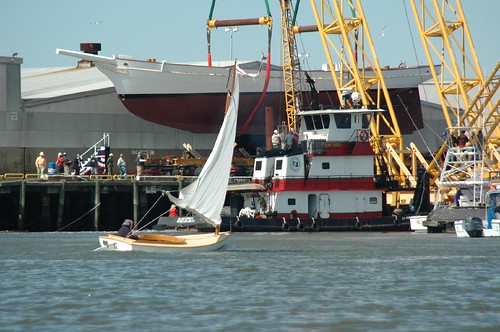
Today was a pleasant day filled with activity. After meeting with Gabby's new mom in the morning, I went over to Mt. Pleasant to Patriot's Point to meet a friend and listen to Plain Jane and watch the ships go by. I wish that I were on one of them heading for the open sea.

I didn't exactly go to sea but did the 6-12 watch on the Spirit of SC. It was a beautiful night with a nearly full moon. I had my camera, sleeping bag, and a thermos of hot chocolate but no gnat repellant. The gnats were out in full force just before dusk.

There were a couple of tugs tied up near the Spirit so I wandered over to photograph some of the lines and shackles. As I doing this, one of the AB's on the tug came out to say hello. He was a young guy who had been working for Stevens Towing for several years. Anyway, I asked him a bunch of questions about being on the tugboat and he gave me a tour of the ship. It was fun and I photographed the engine room (the heart of a tug) and other interesting things. I think the AB was lonely because he came over to talk to me and the other lady on watch for a long time.

Every two hours we would make our rounds to pump the bilges and time the pumping. We would check the hatches and holds for moisture. We would also check all the lines to make sure that they were secure. It's not rocket science but it gives you a chance to be on the deck of South Carolina's latest tall ship.

Eventually, the captain of the tug showed up and he came over to sit on the dock and talk to the two of us on the Spirit. We all shared some stories. Cheryl, the other lady on watch with me, brought some scones and I brought brownies so there was plenty of stuff to feed the tug guys.
It made the hours go by quickly. Before I knew it, it was nearing midnight and time to inform the next watch crew that showed up.

Thursday, March 29, 2007

Hot spots

With spring already here, many Labrador will be shedding their winter coats. Shedding is also the time when hot spots can occur. If you use a slicker brush to get out the dead hair, then the chances of developing a hot spot are minimized. I have combs, slicker brushes, a shedding rake and pin brushes to use on the dogs. Labradors shed twice a year, although sometimes it seems that they are shedding all the time! It's best to brush Labradors daily and avoid giving baths that can dry out the coat and the skin.

Most hot spots occur when the dead hair starts to itch. Hot spots can also occur as a result of flea allergic dermatitis. A flea will bite, the dog will scratch, and an irritation will occur. Bacteria can then cause a slight infection and bumps will occur on the skin. It can be a vicious cycle with the dog continuing to scratch until a wound is created.

We treat hot spots with Chlorhexiderm scrub and Neopredf powder. If bad enough, you will have to give an antibiotic such cephalexin. I would definitely check with the vet should a hot spot develop.

Labrador hair should be showing up soon on a carpet near you!

Tuesday, March 27, 2007

Puppy Kindergarten


One of the things that I suggest to all the puppy owners is that they take their puppy to a kindergarten class. These classes are usually run by local obedience or breed clubs within driving distance of most people. They are really fun because it's an opportunity for puppies over 12 weeks of age to meet other people, other puppies and get some basic obedience instruction. Over the years, I took several puppies to kindergarten class.

A favorite game at the classes I attended was "pass the puppy" in which the puppy went around the circle with owners sitting on the floor and was actually passed from person to person. This is great socialization for puppies and they seem to enjoy it. The obedience part of the classes basically deals with learning to walk on a leash, learning to sit and learning to heel. The classes are a great introduction to further obedience classes and can be wonderful for those dogs and owners who are interested in conformation showing.

Aggression is something that should always be of concern with a puppy. Going to classes helps with interactions with other dogs but be sure that the other dogs are friendly. Since these are puppies, most are very happy and enjoy the interactions. Labradors are such happy dogs anyway that they enjoy any excuse to be goofy. Proof of vaccination is required for classes so be sure to ask about that and make sure that the instructors require such proof. No matter what the pursuit, the main thing is to have fun with your dog. Hopefully, kindergarten is just the start with the many activities that you and your Labrador can do together.

Sunday, March 25, 2007

Judging on the Tarheel Circuit

I flew up to Raleigh yesterday so that I could judge this morning for the Fayetteville Kennel Club. There was a nice entry of around 60 Labradors. It's hard because the people that exhibited are people that I've shown with and known for years. I wish that I could say that the overall quality today was excellent but it was fairly average with a few very nice dogs and many that weren't real standouts. Coats were either lacking or too soft. I really liked the puppy that I put up for WD. He was a very nice puppy. The bitches were better in profile than the dogs but several had poor movement with a lot of "sidewinding". I realize that it's impossible to make everyone happy so you just do the best job that you can do based on what you observe in the ring with movement and structure. If the Labrador doesn't have good movement then how can it be expected to do work in the field?

I was glad to get back home this evening and have a few hours to just take it easy. After walking around on concrete and tossing and turning in a strange bed, it will be nice to just rest.

Friday, March 23, 2007

Becca


Today is the anniversary of the loss of dear sweet Becca. It was one of the darkest days for me because Becca died after having a C-section. Her six puppies were saved but she died in my arms on the way into our driveway. I'll never know the cause but most probably it was a pulmonary embolism since it happened so quickly. The shock and horror of that moment remain with me. It's one of those moments when time stops and you wonder how you will ever get through the next hour much less the days ahead.

Thanks to several Labrador breeders, the puppies had surrogate mothers for 3 weeks until they were finally able to eat mush on their own. If anyone ever thinks about breeding their girl, let them think about Becca and what can happen. They don't call dog breeding the heartbreak hobby for nothing. I miss you Becca.

Wednesday, March 21, 2007

Dog Politics


I can't help but post this since I'm sure that something similar will be coming to your town or county in the near future. It' about whether the candidate you vote for is dog friendly. Luckily, I live on Wadmalaw where there isn't a dog limit (yet).

One of our neighbors has 7 calves in his backyard who live in cowhouses that look like a big doghouse. The Duluxe model is shown for your viewing pleasure. I like seeing the calves lying about in the yard and playing. Wadmalaw is an animal friendly place thankfully.

Now I can understand that having 12 Labradors in a residential neighborhood is probably not a good idea, especially since dogs do bark. Unfortunately, it's a dilemma that everyone will be facing. If we weren't living on acreage in the county, it would be highly unlikely that we would ever have continued to show our dogs or been as successful as we have been with them.

Monday, March 19, 2007

It's leaf time again


Today I feel rested and amazingly energetic considering the busy weekend that I had. After standing watch on the Spirit of SC until midnight and getting home at 1 AM Sunday morning, I got up around 7 AM, lit the fire because it was chilly, and got a cup of coffee. I walked the dogs and let the others out and came back in for a second cup of coffee. Instead, I made the mistake of crawling back into bed to read the paper. I was evidently more tired than I thought because I didn't wake up until nearly noon! Yikes, I haven't done that since I was a teenager! Who sleeps until noon????

Feeling guilty, I went outside and worked in the yard for the rest of the afternoon. The oak leaves are raining down so there were piles and piles to pick up and burn. I just love the smell of burning leaves though so it made for a very cheerful afternoon.

Tomorrow is Daisy Lanier's birthday. She is a Surry girl who is 8 years old. Her human parents Shannon and Troy love her and sent a photo of Daisy. Happy Birthday Daisy and many more! It seems like only yesterday when Shannon and Troy came to pick up their puppy and said that they would name her after our old girl Fernwood Miss Daisy. I wish that I could slow down the years.

Saturday, March 17, 2007

On the progging trail


When I visited Smith Island, there was a lot of talk about progging in the marsh. Progging is the local vernacular for finding something of value in the marsh, more or less beachcombing but in the marsh. At Station 12 on Sullivan's Island, there is a trail through the marsh that I call the progging trail. Today, I took Stella on the trail. She loves to go and always runs ahead and then stops to look back at me. It was quite a windy day today and not very warm. By the time we got to the end of the trail, the sun felt good. We hustled on the way back as it was off the beach for all dogs at noon. Stella enjoyed the outing. We didn't find any treasure in the marsh today but there will likely be some again in the near future. I have found a Hobie cat on Sullivan's Island and will likely try to find out if anyone claims it. If a boat is left abandoned in SC for a while, then a lost and abandoned boat form can be filled out.

I then took Stella and Aggy to the Isle of Palms doggy park. It is always fun to go there. There were other Labradors there as well as goldens and a silky terrier who could retrieve. Aggy loves to play so she was running all around the doggy park and retrieving the little frisbee that the silky was going out to get.

Tonight I also stood watch on the Spirit of SC from 6 to midnight. It was cold and windy and the ship has no heat. The standing orders were to pump the bilges every 2 hours and record the time that it took to do so, check all the lines and check for water in the holds. It was fun as my other watch partner was a lady who has a great sense of humor. The Spirit is tied up near Stevens Towing and she said that last week the tugboat crew was having a party. So we joked about telling them to bring us some scones and good coffee but guessed that they were having Wild Turkey in a box (rather than wine in a box). She told me stories about camping for 2 weeks where there was no shower just a bag of water hung up on a pole. We had a great time laughing about all kinds of things so it made the hours go quickly. She and I are on watch again in two weeks so I'm bringing a big thermos of coffee and she's bringing the scones. We can't trust the tugboat crew to cater our watch!

Thursday, March 15, 2007

Last night's row

It was a bit windy last night for our rowing session. I was coxswain which was fun. I did however not look at the tide tables before heading out so we went downriver on high slack which meant that we were coming back on an ebbing tide which was hard going. It's a bit dicey getting out of City Marina but we managed to row our way out without hitting any other boats or endangering life and limb! That's always a big plus!

We had a new rower with us last night and he eventually caught onto the stroke rhythm. I suppose that some people have a hard time following the stoke while looking at their oar. By the end of the row, he was in sync with the rest of us.

I'm looking forward to getting my single in the water soon. The warm weather that we've been having is making me want to be on the water more and more. I'm sure that there will probably be a few more days of chilly weather but in Charleston, March is generally the end of bad weather. By May, it is hot!

The puppies are enjoying playing in their puppy yard. There are several obstacles set up for them to jump and play on. They enjoy rolling each other and generally being goofy. It's time to get these babies on a leash though. Otherwise, I'll have bucking broncos on the end of the leash if I delay.

Tuesday, March 13, 2007

It's tick and flea time

It's getting to be tick and flea time with the seed ticks all over the woods. I pulled four off my pant leg this weekend. Fleas have been an issue for a while. There are years when we get a hard enough freeze that the nasty little things are killed. Then, when you live in the country with a lot of squirrels and other critters, it's hard to entirely get rid of fleas. We use Frontline Topspot which seems to work well for adult fleas. However, it's also advisable to use Progam for the larvae. Brushing and combing helps to determine whether the fleas are present and is good for the skin. It's hard though to get a flea comb through Labrador hair.

Ground treatment is also good to do and we do that twice a year in the paddocks. We till up the ground and then put down lime. There are no really good yard flea control agents that are approved by EPA. We used to use Dursban but can no longer use that. Sevin dust can't be used because it can cause neural tube anomalies in fetal puppies. One always has to check on what side effects could occur when using any pesticide.

In the house, it's best to vacuum frequently and empty the vacuum bag. We also use pyrethrin shampoos that are not toxic to animals. I hate fleas but realize that in the Charleston area where the temperatures seldom freeze, fleas, like cockroaches, are a part of the ecosystem.

Sunday, March 11, 2007

Busy Sunday


I got up way before dawn and drove to Hilton Head to make a 9 AM ring call. Today I just showed Amelia who was happy in the ring, although she was the only puppy bitch being shown. A fellow breeder, Helen Gipe, rode down with me which made it nice as we could catch up on things and talk about life and dogs. We both decided that it would be nice to have fewer dogs and more leisure time. Not a bad idea since the dogs do tie you down and vacations are a luxury!

After getting home, I took a nap and then loaded up Stella and Pink to take them to the dog park and to the beach. Pink didn't like all the other strange dogs at first but eventually warmed up and started to play. Stella had a blast and both girls got new kerchiefs made by a lady who comes to the dog park. Stella's had shamrocks and Pink got a "surfer girl" kerchief.

We got to Station 12 just as the sun was about to set. It was beautiful and we took a long walk. Stella chased the birds and played with some other dogs. There are always people who love Labradors at the beach and the dogs get lots of hugs and pats on the head. After watching the sun go down and the lights of the city come on, we reluctantly headed back to the van. It was a long day but an enjoyable one.

Saturday, March 10, 2007

Dog show in Hilton Head

I went to the dog show in Hilton Head this morning. We showed around 12:30 PM. I took Amelia (Surry's Terminal Frost) and Vera (Surry's Earthbound Misfit). Amelia won her class and Vera took second in hers. Vera was a little apprehensive because of all the noises but eventually she was happy and enjoyed being petted by spectators. Amelia was her usual happy self. It turned out to be a beautiful day with no rain. It was actually hot in the sun but there was a good breeze blowing which helped to keep things bearable.

I'm driving back and forth to the show so tomorrow I'll have to be up and out the door by 6:30 for a 9 AM ring call. Ugh--I would love to sleep in one day of the weekend until 7 PM. Guess I'll have to wait until next weekend for that!

Thursday, March 08, 2007

Importance of a good OFA technique

I've been lucky to have a wonderful vet who knows the correct positioning of hips and elbows for OFA certification. He is a perfectionist when it comes to getting the dog positioned correctly and having a good clear x-ray taken. Dr. Shong often takes 4 or 5 shots to make sure that he has the best one for submission to OFA. It is possible for dogs to be normal with regard to elbows and to have good hips but because the vet either didn't get the positioning right or the x-ray wasn't the best, the dog didn't pass. Not every vet knows how to get the positioning right so it's important to find one who does. Several breeders have driven many hours to come to Dr. Shong. He takes pains with each dog and wants to make certain that positioning isn't one of the reasons that a dog won't pass certification. I've seen crooked spines, unequal foramens, and other indicators that the dog wasn't positioned correctly on x-rays taken by other vets. For such an important decision, it's worth getting the dog to someone who takes a good x-ray and knows how to position the dog.

Tuesday, March 06, 2007

Stella finds a big piece of line


Today, I took Stella to the beach for a long walk. During the walk, I came across a hawser from a tugboat, possibly the Elizabeth Ann who has been hauling mud scows out to the dumpsite off shore. Anyway, I decided that I wanted to bring this huge line back to my van and take it home. It was loaded with sand and wet which made it very heavy. Plus, I had to drag it for about a half mile on the beach and back to the van. It was pretty tiring work. Several people stopped to ask what I was doing and I said that it was a new exercise routine to burn off more calories while beach walking. They seemed very interested in the line and one art student wanted to take it home to photograph it. Are you kidding, I thought, after dragging this thing for nearly a half mile, do you think that I'm going to give it up now???? So Stella and I struggled...well, mainly I struggled while Stella just tagged along and wagged her tail. We finally got the hawser back to my van. I also found a hard hat with the Oswalt label on it and surmised that it was lost during the launching of the Spirit of SC since Oswalt did the moving of the ship from the shipyard to Union Pier. It was quite a time at the beach to find all these treasures. Now I'm trying to decide what to do with the hawser.

Sunday, March 04, 2007

Launching Day


What an exciting day this was! The crew of the New Charleston Mosquito Fleet met at the Maritime Center around 10:30 and cast off lines at around 11:15. We rowed out into the Harbor and were greeted by a festive sight. There were boats everywhere, large and small. Everyone was there to celebrate the launching of the Spirit of South Carolina. There were large yachts, shrimp trawlers, small power boats, sail boats of all sizes, and two 34 ft. row boats. We were allowed inside the police boat perimeter for the launch. The ship was christened by a middle school student from Chapin who won the essay contest about the Spirit of SC. After all the dignitaries spoke, the tugs from Stevens Towing gently lifted the Spirit over the water and lowered her slowly down. Horns blew, small cannons were fired and we tossed our long oars and pointed them skyward in a salute to this new tall ship. God Speed Spirit!

Saturday, March 03, 2007

Getting ready to launch


Today's email is not about Labradors but about a great event that's going to happen tomorrow. The Spirit of South Carolina will be launched tomorrow from Union Pier after seven years of hard work by a score of volunteers and fund raisers. The Spirit is an educational vessel that will take students on cruises where they learn science and math skills as well as team work and how to get along with each other. There will be sails for at risk children and the grades will encompass middle school through college. I can't say enough about the beauty of this ship. It is a 4 million dollar vessel that has been lovingly built by master boat builders and just ordinary people. The hours of dedication and love that the volunteers have put in is just incredible. It is truly a wonderful thing that has been done and a lot of self-sacrifices have been made. I hope that if you have a chance you will either watch the launch in person or on TV. There is a web site to go to so that you can read about the Spirit.

I'll be with the crew of the pilot gig so will have one of the best seats in the house. The pilot gigs have been asked to be on hand during the launch. I'll be snapping lots of photos for sure.

Friday, March 02, 2007

A rainy Thursday

Last night the puppies were having a great time wading in the puddles left by the heavy downpour of rain. It was very inclement weather but the dogs had to go out and the kennels had to be cleaned. It didn't seem to phase the Labradors who were bouncing around getting muddy. The puppies would run in and out of the DogLoo set up in the puppy paddock while their kennels were being cleaned. They were all piled in at once during a thunder clap.

Today the weather so far hasn't been bad but more rain and thunderstorms are forecast for this evening. I've signed up for watch duty on the Spirit of South Carolina and hope that all the rumbling and bad winds move on out before I have my watch. The launch of the Spirit of SC is on Sunday. The pilot gig crew will be rowing over to the SC Maritime Center and will have one of the best view of the launching. It's supposed to be cooler but clear that day.

I'm trying to decide how best to leash train all the babies. I think that I'll spend about 15 minutes with each puppy per day for walking on the leash. Then I can gradually increase the time a bit and get each accustomed to standing and staying. It's a challenge to have more than 2 puppies to work with!